
Epidauros
Epidauros
Epidauros was a small coastal polis. The thing that made its name is not the town on the water. It is the inland sanctuary in the quiet valley behind Ligourio, where Greeks came to be healed by Asklepios, the physician-god, son of Apollo. You slept in the abaton. You dreamed. The priests read the dream. Inscribed cures — eyes, limps, barrenness — still line the museum.
The architecture is a complete Classical healing campus, not a single monument. Temple of Asklepios. Stadium. Gymnasium. Katagogion (guest house). Roman baths and a small odeon layered on later, because the sanctuary kept working under the Empire. The circular tholos, designed by Polykleitos, is the building archaeologists still argue about: tomb, underground rite, or both. Only the foundations and the puzzle of its concentric walls remain on site; the carved ceiling coffers are in the museum.
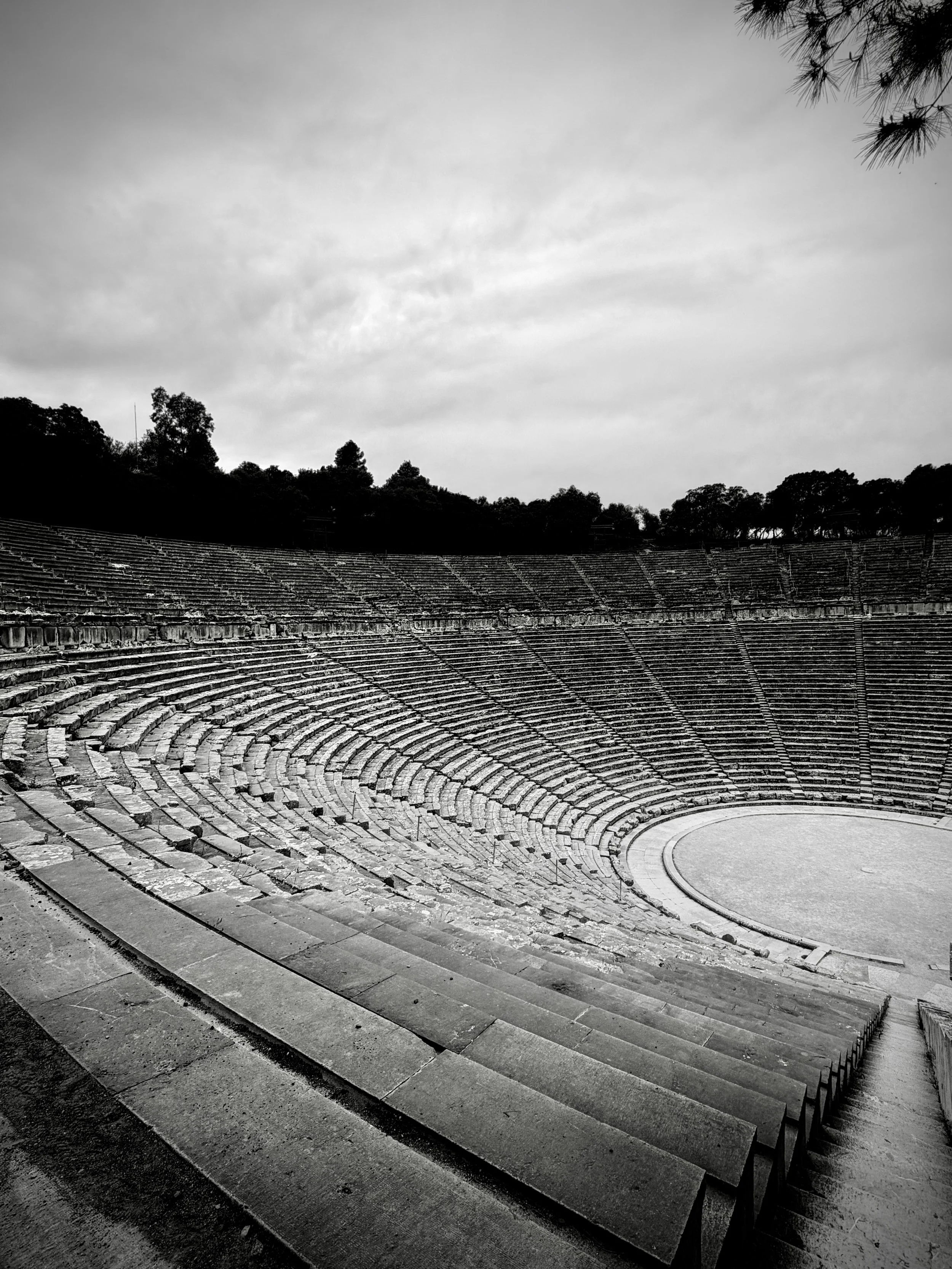
Then the theatre. It is why sailors make the taxi. Thirty-four (later fifty-five) tiers of limestone in a hollow of the hill, about 14,000 seats, acoustics so clean that a coin dropped on the orchestra reads at the back row. It was built for the Asklepieia, not for tragedy as a tourist product. It now holds the Athens–Epidauros Festival every summer. That is the rare Theaters (still in use) tag that is not a stretch.
UNESCO listed the sanctuary in 1988. French, then Greek, excavation pulled the site out of the olive terraces. What you walk is spread out and green — more Olympia than Mycenae. Give it time. People who only stand in the theatre and leave have not seen Epidauros.
Do not confuse this with Palaia Epidavros on the coast. That harbour has its own small Hellenistic theatre by the water, a pleasant dinghy or short-walk ruin. It is not this theatre. Put Palaia in Cruising Access as the door. Put this valley on the ticket.
Site Location
Asklepieion of Epidaurus, near Ligourio, Argolis, Peloponnese, Greece
Coordinates
Sanctuary / great theatre: 37° 35.76′ N 023° 04.75′ E
Palaia Epidavros harbour (sailor’s door): 37° 38.3′ N 023° 09.6′ E (approx.)
Nafplio (full-service alternative): 37° 34.0′ N 022° 48.0′ E (approx.)
Site Description
A wooded sanctuary in a bowl of hills. The theatre is upslope from the main ruins; the museum sits at the entrance. Circuit: museum → temple terrace and tholos → stadium → climb to the theatre. Two to three hours; longer on a festival day.
Cruising Access
⚓ Palaia Epidavros (Palaiá Epídavros) — closest harbour; small theatre in town; taxi ~20–25 min to the Asklepieion
⚓ Nafplio — better shops, yards, and a same-day loop with Tiryns or Mycenae
⚓ Tolo — another Argolic stop; taxi similar to Nafplio
🚶 No walk from the great theatre to the sea.
⚠ Festival weeks: berths and taxis tighten. Book the play separately from the daytime site ticket. The coastal theatre at Palaia is a different monument — worth an hour if you are already on that quay.
Nearby Museums / Libraries
Museum of the Asklepieion at Epidaurus — architectural sculpture from the tholos and temple, votive inscriptions, medical reliefs.
Practical Tips
Drop a coin on the orchestra. Everyone does; it still works.
Morning for empty-theatre photographs; late afternoon for softer stone.
Combine with Nafplio overnight, not with Mycenae in the same rushed day unless you have a car and start at opening.
If you only have the dinghy and no taxi, walk the small theatre at Palaia and save the great cavea for a day with wheels.
Cruising Guides
Greek Waters Pilot (Heikell) — Argolic Gulf / Palaia Epidavros / Nafplio
Imray G12
Also sail / also see
Palaia Epidavros — harbour and the little waterside theatre
Nafplio — the berth
Mycenae / Tiryns — same gulf, different century
Delphi — the other sanctuary where a god still had a voice
Athens Festival circuit if you time the summer performances
Delphi
Delphi
Delphi
Delphi is not a harbour town that later got a temple. It is a sanctuary that made the harbours matter. Greeks called the stone in the adyton the omphalos, the navel of the earth. Two eagles, Zeus’s story said, met here. The god who owned the slope was Apollo, who — in the Homeric Hymn — killed the serpent and took the shrine from an older earth cult. The priestess, the Pythia, sat over the cleft and spoke. Cities sent treasure. Generals sent questions.
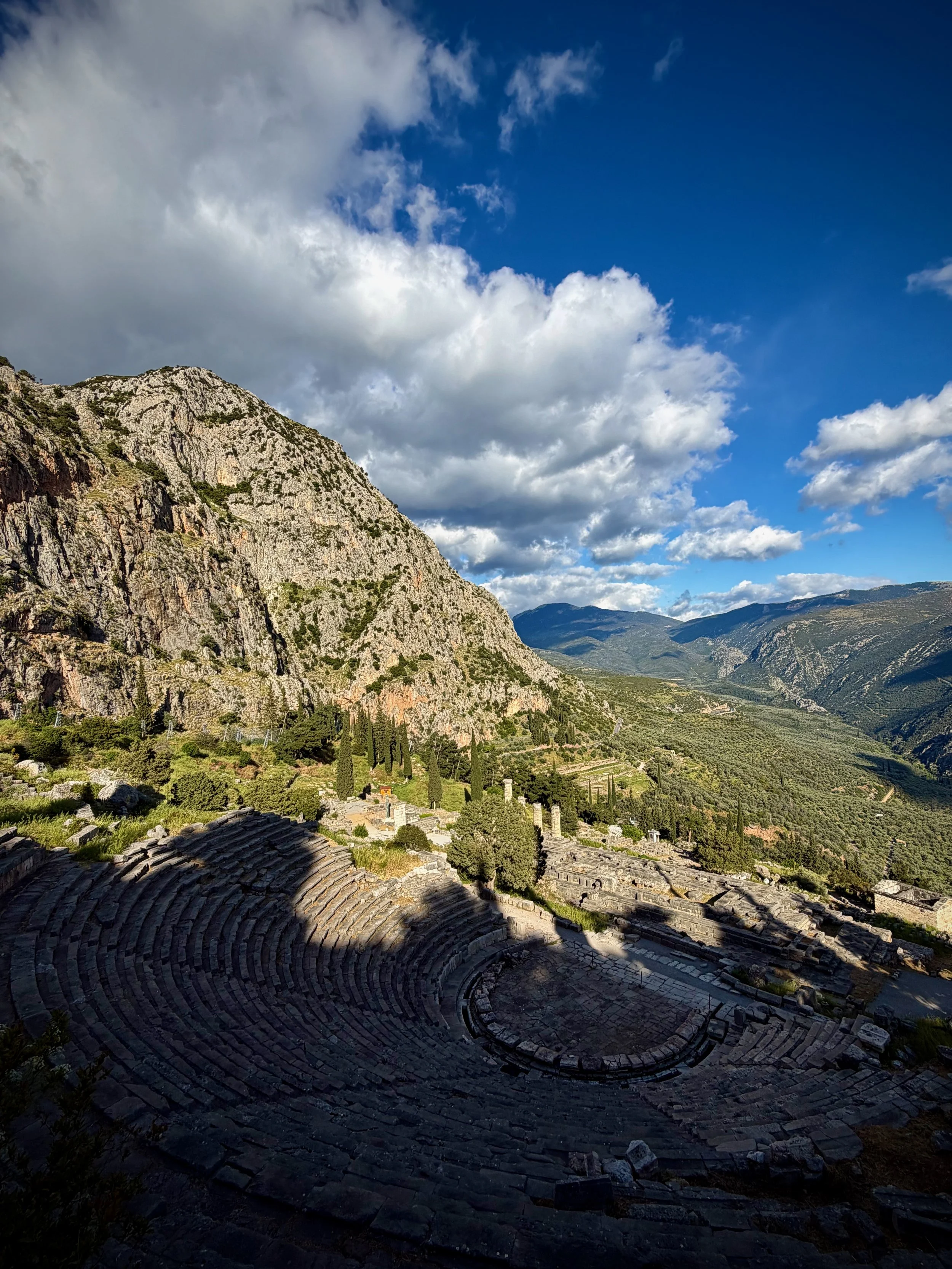
What you walk is the Sacred Way, switchbacking up through treasuries. The Athenian Treasury still stands rebuilt: Athens parked a slice of Marathon and a slice of pride in stone. The Siphnian Treasury was richer and is now mostly in the museum. Above them the Temple of Apollo is a platform and columns, not a complete cella. That is enough. The theatre sits on the temple’s shoulder — a Greek theatre still used for the summer festival. Higher still, the stadium held the Pythian Games, Apollo’s answer to Olympia.
Herodotus is the sailor’s author here. Croesus of Lydia asked if he should attack Persia and was told he would destroy a great empire. He did: his own. Before Salamis the Athenians were told to trust the wooden wall; Themistocles read ships, not the Acropolis fence. After the Persian Wars the Greeks raised the Serpent Column from the spoils of Plataea (the column later went to Constantinople). Delphi is where pan-Hellenic politics wore a religious face.
Alexander came. So did Hellenistic kings and Roman emperors, including Hadrian. Nero lifted statues. By late antiquity the voice had thinned. Christianity shut the oracle. What French excavators stripped out of the village of Kastri from 1892 onward is the site you walk: a mountain street of dedications, not a city grid.
For this guide Delphi is the type-site of the Oracles / Sanctuaries tag and the cleanest Apollo page in the book. It is also the reminder that some of the essential Mediterranean sites are one taxi inland from a working gulf harbour. You do not sail to the Pythia. You sail to Itea or Galaxidi, then you climb.
Site Location
Delphi, Phocis, Greece (south slope of Mount Parnassus)
Coordinates
Sanctuary: 38° 28.95′ N 022° 30.05′ E
Itea port / marina (nearest working quay): 38° 26.0′ N 022° 25.5′ E (approx.)
Galaxidi harbour (preferred yacht stop): 38° 22.6′ N 022° 23.0′ E (approx.)
Site Description
A terraced sanctuary above the modern village. Route: museum (do this first or last) → Sacred Way → treasuries → Temple of Apollo → theatre → stadium if you have the legs. The Castalian Spring is beside the road. Allow three to four hours; the museum is not optional if you care about the bronze Charioteer.
Cruising Access
⚓ Galaxidi — best sheltered harbour on this stretch of the Corinthian Gulf; taxi ~30–40 min to the site
⚓ Itea — closer (~20–25 min) but a commercial/work port
🚶 No walk-off-the-boat access. Parnassus is inland.
⚠ Summer coaches from Athens pack the site mid-morning. Go off the ship early. Winter hours are short. The gulf itself is an easy reach from the Corinth Canal or from the northern Peloponnese; the mountain road is the only hard part.
Nearby Museums / Libraries
Delphi Archaeological Museum — Charioteer of Delphi, Siphnian frieze, omphalos, bronze and ivory. Same ticket complex as the sanctuary.
Practical Tips
Combined site + museum ticket.
Theatre and temple photographs want afternoon side-light; the museum wants your fresh attention.
Combine with a night in Galaxidi, not a dash back to the Canal the same afternoon.
Hosios Loukas is a Byzantine add-on inland if you have a car and a second half-day — separate tag world.
Cruising Guides
Greek Waters Pilot (Heikell) — Corinthian Gulf / Itea / Galaxidi
Imray G12 or Ionian/Corinthian Gulf coverage
Also sail / also see
Galaxidi — the harbour you will actually like
Ancient Corinth / Lechaion — the other end of the gulf and the Canal
Delos — Apollo’s island sanctuary (different sea, same god)
Olympia — the other pan-Hellenic games site (also a taxi from a west-coast gulf)
Delphi
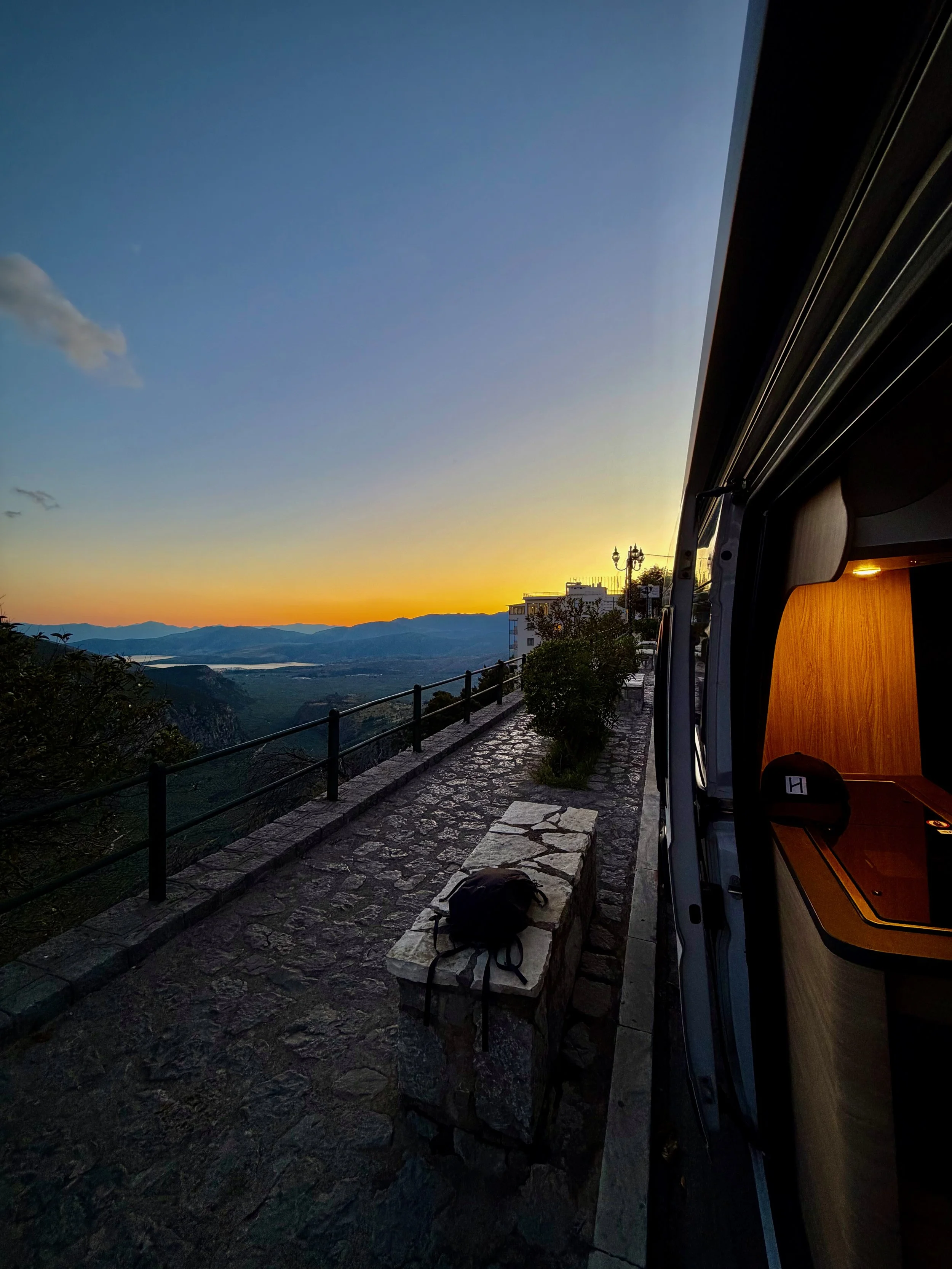
Stick around in town for a late evening meal after visiting Delphi